Ground rent and peppercorn rent explained
Ground rent is what a leaseholder pays the freeholder for the land under the building. A peppercorn rent is a token amount with no real value, which is the outcome you want, because there is nothing to pay and nothing for a lender to object to. Problems come from review clauses that double the rent at short intervals. Those can make a perfectly sound property unmortgageable, and the fix is usually a lease extension or buying the freehold.
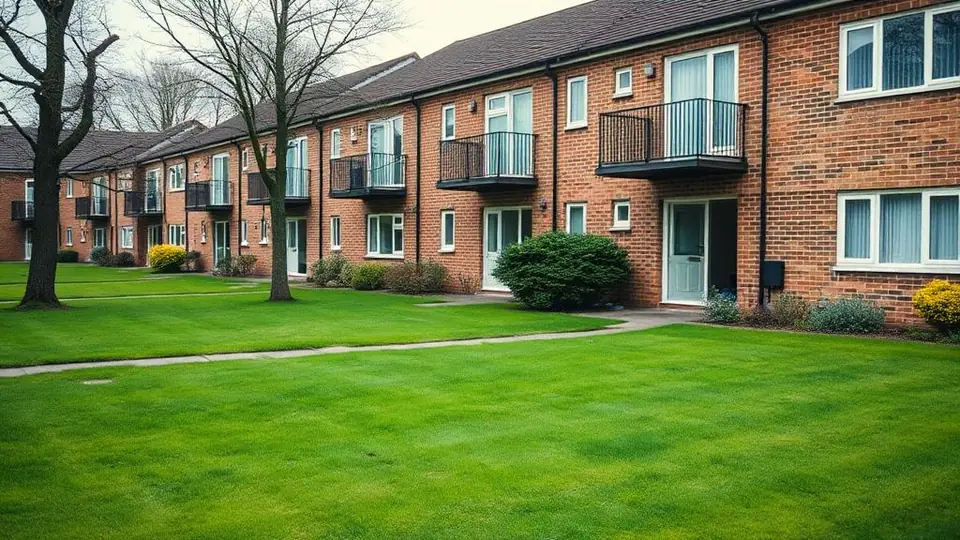
Been turned down by a lender's surveyor?
We buy with our own cash, so a mortgage valuation can't sink the sale. Send us the postcode and the problem.
Ground rent, service charge, and why they get confused
Ground rent is paid for the land. Service charge is paid for maintaining the building and communal areas. They usually arrive from the same managing agent, sometimes on the same statement, but they are legally different and they cause different problems on a sale. A high service charge makes a flat less attractive. A badly drafted ground rent can make it unsellable to anyone needing a mortgage.
What peppercorn rent means in practice
The phrase is literal in origin: a lease reserving a rent of one peppercorn, a token so small it was never meant to be collected. Modern leases record a peppercorn rent as a nominal sum, or state that no rent is payable. Since the Leasehold Reform (Ground Rent) Act 2022, most new residential long leases in England and Wales are restricted to a peppercorn rent. Existing leases were not changed, which is why the old clauses are still circulating in the second-hand market.
How review clauses turn into a problem
A ground rent that starts at a modest figure and doubles every 10 years does not look alarming on a completion statement. Projected across the term of the lease it becomes a large liability, and surveyors value the property accordingly.
| Years from start | Doubling every 10 years | Doubling every 25 years | Peppercorn |
|---|---|---|---|
| 0 | £250 | £250 | Nil |
| 25 | £1,000 to £2,000 | £500 | Nil |
| 50 | £8,000 | £1,000 | Nil |
| 75 | £32,000 | £2,000 | Nil |
The figures above are illustrative arithmetic rather than a valuation, and every lease has to be read on its own wording. The point is the shape of the curve, and why a lender looks at the review interval rather than the current amount.
Where lenders draw the line
- Doubling at short intervals. Many lenders decline where the rent doubles more often than about every 20 years.
- Rent as a share of value. A ground rent that is a significant percentage of the property value, commonly cited around 0.1 to 0.5% depending on lender, gets flagged.
- Assured tenancy thresholds. Where ground rent exceeds the statutory thresholds, a lease can in theory fall within assured tenancy rules, which introduces a forfeiture route lenders dislike.
- Escalation without a cap. RPI-linked reviews are generally accepted. Uncapped multipliers are not.
- Onerous or unclear drafting. Anything the valuer cannot model confidently tends to be treated as a risk rather than a neutral.
Deeds of covenant, notices and licences to assign
Separate from the money, leasehold sales carry paperwork that has to come from the freeholder or managing agent. A deed of covenant binds the incoming buyer to the lease obligations. A notice of transfer tells the freeholder the flat has changed hands. Some leases require a licence to assign or a landlord's certificate. Each usually attracts an administration fee, and each depends on a third party responding.
This is where leasehold sales quietly lose weeks. The parties are ready, the money is ready, and everyone waits on a managing agent's compliance inbox. Asking your solicitor to request the leasehold information pack at the very start of the process, rather than when the buyer's solicitor asks for it, is the single most useful thing a leasehold seller can do.
Fixing an onerous ground rent
Extending the lease through the statutory route replaces the ground rent with a peppercorn, which solves the lending problem and the term at the same time. Buying the freehold, individually for a house or collectively for a block, has the same effect. Some developers set up voluntary schemes converting doubling clauses to an RPI basis after the Competition and Markets Authority intervened on leasehold sales practices, so it is worth asking whether your building is covered by one.
All of those take time and money. If the sale needs to happen before any of them can finish, the alternative is a buyer who does not need a lender's approval.
Lease checker: will a mortgage buyer get funding?
Two questions. The answer is an indication of lender appetite, not a valuation or legal advice.
Ground rent or lease terms
Ground rent or a lease clause blocking the sale?
Doubling ground rent, an onerous review clause, or a deed of covenant your buyer's lender won't accept. We buy without lender approval.
- Doubling and escalating ground rents are not a blocker for us
- We buy with the freeholder consents outstanding
- You get one figure, in writing, before you commit to anything
We ask for the address, your timescale, and a number to call. Nothing else.
Selling with a ground rent problem
We buy without mortgage finance, so a doubling clause does not stop our purchase the way it stops a normal buyer's. We read the lease, price the liability, and put a figure in writing. Where the cheapest answer is to extend the lease first and sell on the open market, we will tell you that rather than pretend otherwise.
Common questions
- What is a peppercorn rent?
- A peppercorn rent is a ground rent of no real value, historically a token amount such as one peppercorn or a nominal sum recorded in the lease but never actually collected. It is the best outcome for a leaseholder, because there is nothing to pay, nothing to review, and nothing for a lender to object to.
- Why is a peppercorn rent good for selling?
- Because it removes an entire category of buyer and lender objection. There is no escalating cost, no review clause to model, and no risk of the rent crossing a threshold that affects lending or brings the lease within assured tenancy rules.
- What is ground rent?
- A sum a leaseholder pays the freeholder each year for the land the building sits on. It is separate from the service charge, which covers maintenance. Under the Leasehold Reform (Ground Rent) Act 2022 most new residential long leases in England and Wales can only charge a peppercorn rent, but existing leases keep whatever the lease says.
- What is a doubling ground rent clause?
- A review clause that multiplies the rent at fixed intervals, for example doubling every 10, 20 or 25 years. Over a long lease the figures become large, which is why lenders scrutinise them. Some housebuilder leases from the 1990s and 2000s used doubling clauses that later made the properties very hard to mortgage or sell.
- Can ground rent make a property unmortgageable?
- Yes. Many lenders will decline where ground rent doubles at intervals shorter than around 20 years, or where the rent is a significant proportion of the property value. Some also refuse where the rent exceeds thresholds that could bring the lease within assured tenancy rules, because of the theoretical forfeiture risk that creates.
- What is a deed of covenant?
- A document a buyer signs agreeing to be bound by the obligations in the lease, such as paying service charges and observing restrictions. Many leases require one on each sale, along with a notice of transfer to the freeholder or managing agent, and administration fees are usually payable. It is routine, but chasing a managing agent for it is a common source of last-minute delay.
- Can I get rid of a bad ground rent clause?
- Extending the lease through the statutory route replaces the ground rent with a peppercorn, which is often the cleanest fix. Buying the freehold, individually on a house or collectively on a block, has the same effect. Some developers set up voluntary schemes to convert doubling clauses to an RPI basis. Each route has a cost and a timescale.
Sources
Been turned down by a lender's surveyor?
We buy with our own cash, so a mortgage valuation can't sink the sale. Send us the postcode and the problem.
Related guides
 Selling a flat with a short leaseWhy 80 years matters and what extending costs.
 EWS1 form and claddingThe building-level problem that stops flat sales.
 Selling an unmortgageable property: full guideCompare all three routes for a property lenders will not touch.
 Selling a tenanted propertyGround rent and consent-to-let clauses in a let leasehold flat.
 Cash house buyers explainedHow to check a buyer can complete without a lender.
 How we work out our offerWhere a lease or ground rent problem shows up in the numbers.